Toy Blast
- 4.7
- Rating
- 100.00M
- Installs
- Free
- Price
 Analysis by App-foxy
I usually judge a puzzle game by what happens after the first few minutes. Is it easy to understand without feeling empty? Does it give me a reason to return when I have only a short break? And does the challenge come from making decisions rather than simply repeating the same move? Toy Blast makes a strong first impression on those points. It is a free matching puzzle game from Peak, built around clearing groups of same-colored blocks and solving compact level layouts. The presentation is cheerful, but the real appeal is how quickly a simple board can turn into a small planning problem.
This is not a slow, contemplative puzzle where I can study one position for several minutes. It is closer to a quick-fire mobile game that rewards recognizing patterns, creating useful combinations, and knowing when not to spend a powerful move. That distinction matters. If you want a calm logic exercise with unlimited experimentation, another puzzle category may suit you better. If you want something that starts instantly and can fill a short pause without asking you to learn complicated rules, this is an easy game to consider.
How I Decide Whether Toy Blast Is Worth Keeping
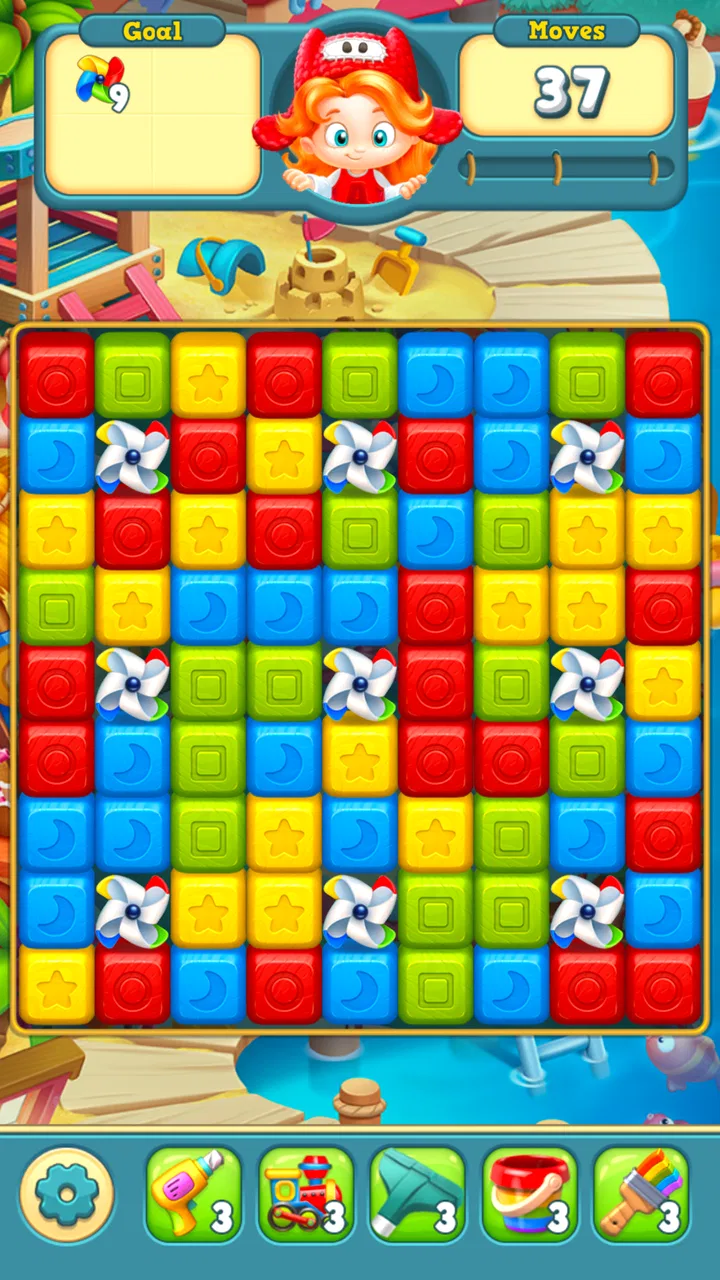
My first decision criterion is the clarity of the basic loop. In Toy Blast, the board communicates its important information visually: colored blocks, obstacles, targets, and available moves are all presented in a way that is quick to read. I do not need a long tutorial to understand the central action. Tapping a matching group clears it, and larger groups generally create more useful effects than tiny ones. That simplicity is the foundation of the experience, not a limitation by itself.
In-Depth Coverage of Toy Blast
The second criterion is whether the game creates meaningful choices. A matching game can become dull when every move is obvious, especially if the board is generous enough to solve itself. Here, I often have to decide whether to clear a small group immediately or wait for a better setup. That choice becomes more important when the level has a restricted objective or a limited number of moves. I found that the best results came from looking at the whole board before tapping, rather than reacting to the first convenient match.
The third criterion is how well the game fits real life. I can play a level during a short wait, stop, and return later without needing to remember a complicated story or control scheme. That makes it useful for brief sessions. At the same time, the quick structure can encourage “just one more level” behavior, so I would not describe it as a particularly restful game for everyone. It is relaxing when I want light concentration, but less so when I am already tired and the board starts demanding careful planning.
The game is free to download and suitable for Everyone, which makes it approachable for families and casual players. Its average rating is 4.7 from around 3.2 million ratings, and it has passed 100 million installs. Those figures do not replace personal experience, but they do show that the format has reached a very broad audience. Peak released it on December 12, 2014, and the current version is 23644, so this is an established title rather than a new experiment.
The basic controls are simple, but the board rewards patience
The most useful habit I developed was resisting the urge to clear every available group. A small match may remove a few blocks, yet leave the board in a worse shape. Before tapping, I look for moves that bring colors together, open a blocked area, or create a larger group on the next turn. This is a small change in approach, but it separates random tapping from actual progress.
Large groups are valuable because they can produce stronger clears and affect more of the board. I try to build them near the area that matters most for the current objective instead of creating one in an irrelevant corner. A powerful effect used too early may look impressive but fail to solve the real problem. In difficult stages, positioning matters more than simply making the biggest group available.
Another practical tip is to inspect the lower part of the board before committing to a move. Clearing blocks above can change what falls into place, so the apparently best move at the top may not remain best after the board shifts. I do not calculate every possible outcome, but I scan for chain opportunities and avoid closing off spaces that could become useful later. This makes the game feel more like a compact tactical puzzle than a reflex exercise.
Why the short format works so well
Toy Blast is particularly good for the small gaps in a normal day. Imagine waiting for an appointment with only a few minutes available. I can open the game, play a level, and put the phone away without learning a map, managing a character, or following a long sequence of dialogue. The bright visual feedback also makes each successful move feel complete, which is important when the session is brief.
It works for children who understand color matching, adults who want a low-pressure distraction, and experienced puzzle players who enjoy optimizing a limited board. The age rating helps make it a broadly accessible choice, although younger players may still need guidance around optional purchases. The colorful style is friendly rather than intimidating, and the controls are comfortable for one-handed play.
Its compact design also makes it a reasonable choice for someone who dislikes complicated mobile games. I never feel that I need to master a large control system before enjoying it. The challenge comes from arrangement and timing, not from memorizing dozens of buttons. That makes the learning curve gentle while still leaving room for better decisions.
Where This Matching Puzzle Wins
The biggest strength is the balance between immediate understanding and gradual difficulty. I can explain the central action in one sentence, but that does not mean every level feels identical. Boards become more demanding when objectives compete with one another, when useful colors are separated, or when obstacles limit the space available for planning. The game succeeds because it keeps the rules stable while changing the problems those rules create.
I also like the physical feel of the board. Clearing a group gives direct visual feedback, and larger combinations make the result feel noticeably more satisfying. That feedback is not just decoration; it helps me understand which moves have more impact. When I am learning, I can see the difference between a harmless clear and a move that reshapes the entire layout.
Another advantage is that the game does not require me to build a complex strategy around a character, deck, or long-term inventory. The focus stays on the puzzle in front of me. For players who prefer self-contained challenges, this is refreshing. I can concentrate on the current board instead of worrying about whether I have assembled the correct collection of equipment or chosen the right permanent upgrade.
The game is also forgiving in the way it introduces its ideas. I can experiment with a few moves and understand the consequences quickly. That makes it suitable for someone returning to mobile puzzles after a long break. It is not necessary to study guides before beginning, and the early experience does a good job of showing why larger matches and careful positioning matter.
Three habits that improve difficult levels
First, I save special clears for moments when they solve two problems at once. If the goal involves reaching a particular area while also removing a barrier, using a strong effect where those objectives overlap is usually more valuable than using it for a simple color clear. This is a general principle, but Toy Blast makes it especially visible because the board is small enough to see the consequences.
You May Also Like

 Blood Strike: 2.5 Anniversary
Blood Strike’s Loadouts Turn Every Drop Into a Tactical Gamble
A close look at Blood Strike’s custom loadouts: how fast access to signature weapons reshapes its battle royale rhythm, rewards preparation, and narrows the gap between fights.

 Pandora - Music & Podcasts
Pandora’s Music Is Easy to Start, but Harder to Recover
Pandora’s strength is its low-effort path from a seed to a station. Its weak spot is how much confidence it asks you to place in connection, setup, and quiet recovery.

 8 Ball Pool
 Is Built on Rivalries, Rematches, and Routine
A close look at the rivalries, rematches, shared routines, and unanswered safety questions that turn a quick pool match into a persistent mobile community.

 Samsung Music
’s Quiet Strength Is Playing What You Already Own
Its reach comes less from spectacle than from dependable access to a personal library. That simplicity is both the app’s strongest retention engine and its ceiling.

 AccuWeather: Weather Radar
AccuWeather Review: A Quick, Clear Forecast for Everyday Decisions
For everyday plans, the best forecast is the one you can understand quickly. AccuWeather makes rain timing, radar, and local conditions easy to act on, with a few trade-offs.

 Hill Climb Racing
Why Hill Climb Racing Still Turns Crashes Into One More Run
A tiny car, a bumpy hill and one more upgrade: Hill Climb Racing keeps resurfacing because its simple chaos makes every near-miss feel personal.
More From Our News Desk
View All News


Second, I avoid creating isolated pockets unless the move is necessary. A color group trapped behind other blocks can become difficult to reach, and clearing nearby pieces without a plan may leave the remaining target stranded. When I have a choice, I prefer moves that preserve several routes into the important area. This is one of the less obvious differences between a lucky win and a controlled one.
Third, I use the opening of a level as a scouting phase. Rather than spending the first move automatically, I check which colors are clustered, where the obstacles sit, and whether the board offers an obvious chain. Sometimes the best opening is not the largest group but the move that changes the board’s shape. That extra second of observation has saved me from wasting useful opportunities.
These habits also reveal the game’s strongest design choice: it gives simple actions enough consequences to support personal improvement. I can play casually, but I can also refine how I read the board. That is why the game has more staying power than a basic color-matching toy.
What the large audience tells me—and what it does not
Its popularity is easy to understand. A 4.7 average across millions of ratings suggests that the central format connects with a wide range of players, while more than 100 million installs indicate that it is familiar to people looking for an accessible puzzle. I see those numbers as evidence of reach and consistency, not proof that every player will enjoy the same style of challenge.
Some players will find the bright look and repeated matching loop comforting. Others may see the same qualities as repetitive after extended sessions. The game’s success comes from making a narrow idea highly approachable, so anyone seeking broad variety should think carefully before committing to it as their only puzzle game.
Where Other Puzzle Categories May Fit Better
Toy Blast is not the universal answer for puzzle fans. If you prefer word games, a crossword or word-building app will offer a very different kind of mental workout. If you like numbers and long-term board management, a number-placement game may provide deeper concentration. If you want physics-based experimentation, a game built around objects and motion will probably feel more varied than a block-clearing board.
Even among matching games, the experience can differ substantially. Some alternatives emphasize swapping adjacent pieces, while this game focuses on tapping groups already connected. That makes the decision-making feel different. In a swap-based game, I often plan around a single exchange; here, I think more about the shape of a cluster and how clearing it changes the remaining arrangement. Players who enjoy building cascades through deliberate exchanges may prefer the usual swap format.
There is also a difference between short-session puzzles and deep strategic games. Toy Blast is convenient because I can understand a board quickly, but it does not aim to deliver the complexity of a full strategy title. If I want a game that rewards long planning, extensive customization, or a persistent world, I would choose something else. This is a focused puzzle experience, and its focus is part of both its appeal and its limitation.
Players who dislike bright, playful presentation may also find the style too cheerful. The toy-themed visual language is central to the game’s identity, and it does not try to look minimalist or serious. That is a matter of taste rather than quality, but it is worth considering before installing. A subdued logic game may be a better fit for someone who wants a quieter visual atmosphere.
Who should skip it
I would skip Toy Blast if I know I become frustrated by limited attempts, repeated retries, or progress systems that encourage waiting or optional spending. Matching puzzles can feel fair when a good decision leads to a win, but they can also become irritating when a level seems to depend on a favorable arrangement. The game is best approached as a casual challenge, not as a test of perfect control.
I would also look elsewhere if my main goal were social competition, narrative immersion, or a large variety of mechanics. This game’s value is concentrated in its board puzzles. It does not need a story or a complicated multiplayer structure to work, but that also means it will not satisfy someone looking for those elements.
Finally, players who want a completely cost-free experience should inspect the purchase choices carefully. The game itself is free, while in-app purchases range from $0.99 to $99.99 per item. I recommend treating optional purchases as a firm boundary before beginning, especially if children use the device. The best way to enjoy the game is to decide in advance whether it belongs in a no-spend routine.
Cost of Switching and Everyday Practicalities
Trying Toy Blast is relatively easy because the entry price is free and the minimum operating requirement is Android 7.0. That makes it accessible on many older Android devices, although the actual experience can still depend on the phone’s general condition and available storage. I would install it on the device I use for casual breaks rather than assuming it will replace every other puzzle game.
The real cost of switching is not money alone. It is learning a different way to read a matching board. Someone coming from a swap-based title may initially tap groups without considering how the cleared space will refill. Someone coming from a word or number puzzle may need time to appreciate a game where spatial arrangement changes quickly. The transition is gentle, but the best results come from accepting that the skill is visual planning rather than vocabulary or calculation.
There is also a habit cost. Because levels are easy to start, the game can become a default response whenever I have a spare moment. I find it healthier to use it deliberately: one or two levels during a wait, then stop, rather than opening it automatically every time I unlock my phone. This is not a flaw unique to the game, but its quick accessibility makes the habit particularly easy to form.
For a family device, I would set expectations before handing it over. The Everyone rating makes the content broadly suitable, but the optional purchase range means the payment side deserves attention. A child can understand the puzzle immediately, while the consequences of tapping a purchase option may be less obvious. Clear household rules make the experience more comfortable.
For an older phone, I would also keep expectations realistic. The minimum Android requirement is 7.0, but compatibility does not guarantee that every device will feel equally smooth. If the phone already struggles with other games, I would test Toy Blast during a normal session before making it the main time-killer. That is a practical consideration when choosing any established mobile title.
How I would use it without wasting good moves
My preferred routine is to play with a specific objective for each session. Sometimes I focus on learning to create larger groups; other times I concentrate on preserving open routes to the target area. This keeps the game from becoming mindless tapping and gives each level a small lesson, even when I do not win immediately.
When a board goes badly, I do not restart at the first imperfect move. I watch how the layout develops and identify the point where I stopped planning. Often the problem was not the opening move but a later decision that cleared a convenient group and left the important section inaccessible. That review process makes retries more useful and reduces the feeling that success depends only on luck.
I also avoid spending an advantage simply because it is available. A special clear can be more valuable after the board has shifted, especially when it can connect with another effect or reach a difficult corner. Holding it requires patience, but it is one of the clearest ways to improve without changing the controls or buying anything.
My Recommendation After Weighing the Trade-Offs
I recommend Toy Blast to anyone who wants a friendly, fast matching puzzle with rules that are easy to learn and enough board planning to stay interesting. Peak has built a game that works particularly well in short sessions, and its broad age suitability makes it a practical choice for casual households. The strongest reason to try it is not the colorful theme; it is the way a simple tap can create a surprisingly important positional decision.
I would be more cautious with players who need constant novelty, serious strategic depth, or a completely frictionless free-to-play experience. The core loop remains focused, and that focus may feel repetitive over long sessions. Optional purchases also mean I would set spending boundaries before playing, rather than treating the free download as the whole financial decision.
Compared with a typical swap-based matching game, Toy Blast feels more immediate and more spatial. Compared with a word, number, or logic puzzle, it is lighter and more visual. That places it in a useful middle ground: more thoughtful than a purely reflexive tap game, but less demanding than a puzzle designed for extended analysis.
My final advice is to give it a fair test using the planning habits above. Look at the board before tapping, protect open routes, and save powerful clears for moments that solve multiple problems. If that style feels satisfying, the game can become an excellent companion for short breaks. If you want quiet calculation, rich storytelling, or a much broader set of mechanics, switching to another puzzle category will probably be the better decision.
For me, the verdict is positive with sensible limits. Toy Blast is at its best when I treat each level as a small visual puzzle, not as an automatic time filler. It is free to start, widely accessible, and polished around one clear idea. I would recommend it to a friend who enjoys quick matching challenges, while being honest that players seeking deeper variety or strict control over optional spending may be happier elsewhere.
FAQs for Toy Blast
01What is Toy Blast and how does it work?
Toy Blast is a popular puzzle game where players match two or more blocks of the same color to clear levels and earn rewards. Each level has specific objectives, such as collecting certain blocks or achieving a score. The game includes power-ups and boosters to help overcome challenging puzzles.
02Are there any in-app purchases in Toy Blast?
Yes, Toy Blast offers in-app purchases. Players can buy coins, extra lives, and special boosters to enhance their gaming experience. While the game is free to download and play, purchasing items can help progress through difficult levels more quickly.
03Is Toy Blast suitable for children?
Toy Blast is suitable for players of all ages, including children. The game features colorful graphics and simple gameplay mechanics that are easy for kids to understand. However, parents should be aware of in-app purchases and may want to use parental controls to prevent unauthorized spending.
04How can I sync my progress in Toy Blast across devices?
To sync your progress in Toy Blast across devices, you need to connect the game to your Facebook account. This allows you to save your progress and continue playing from where you left off, regardless of the device you are using. Make sure to log in with the same Facebook account on each device.
05What strategies can help me progress faster in Toy Blast?
To progress faster in Toy Blast, focus on completing level objectives efficiently. Use power-ups and boosters strategically to clear difficult blocks. Plan your moves ahead and try to create large matches for bigger combos. Regularly check for updates or events that might offer additional rewards.
Pros
- Engaging puzzles with increasing difficulty.
- Vibrant graphics and fun animations.
- Regular updates with new levels.
- Simple and intuitive controls.
- No time limits
- play at your own pace.
Cons
- In-app purchases can be pricey.
- Energy system limits continuous play.
- Ads can be intrusive for free users.
- Requires internet for some features.
- May not appeal to hardcore gamers.

Toy Blast
Gallery